
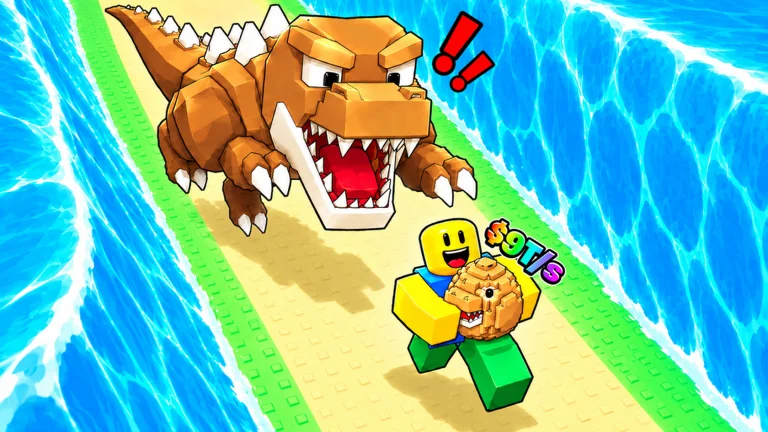
The first goal is a successful return
The official Roblox description gives the core warning: open the sea for Eggs, then run back before the sea waves close. Your first run is therefore not a speedrun. It is a route test that teaches where the return decision lives.
Start with a target you can abandon. A returned Egg, a measured route and a known turn-back point are better first-session progress than one extra pickup that costs the whole trip.
First-run route
Read your starting state
Note your current Cash, movement, Carry space and any visible timer or wave cue before leaving base.
- Screenshot the starting balance
- Choose one reachable target
Open the sea and walk the route
Follow one landmark at a time. Do not improvise a second target until you know how much of the outbound route remains.
- Mark the last safe landmark
- Keep a return margin
Turn before the panic point
Use the earliest point where your observed return time plus a buffer still fits before the wave closes.
- Set a safety buffer
- Leave the final pickup if needed
Write one field note
Record what you collected, how long the run took and what would make the next attempt safer.
- Save the target name
- Update the Sea Run Planner
What to improve after the first return
If the route was safe but slow, test movement or a staff-related upgrade. If you reached the Egg but could not carry enough, solve Carry before chasing a rarer target. If the route was fine but the purchase felt impossible, measure Cash over a fixed interval before spending.
This turns the first run into a loop: observe, choose one bottleneck, make one change, then repeat the same route. Multiple simultaneous upgrades make it impossible to know what helped.
First sea run FAQ
Should I chase the farthest Egg immediately?
No. First measure a route you can return from. A successful shorter run gives you a baseline for movement, Carry and timing decisions.
What if I am one pickup away when the wave feels close?
Turn back. A lost run teaches less than a returned run with a clear note about the missed pickup.
What is the best first upgrade?
The one that fixes your measured bottleneck—route time, Carry, Strength or Cash—not a universal answer copied from another session.
Guide source
Read the source type and checked date before treating a changing claim as a fact.